
Leh district · 3,200 m
Sham Valley
Apricot orchards, ancient monasteries and river confluences, at a gentle altitude for the first days.
Your Sham Valley journey
Sham Valley, planned gently around you
Apricot orchards, ancient monasteries and river confluences, at a gentle altitude for the first days.
- 01
We begin with your Sham Valley
Tell us what draws you here, who is coming and how you would like it to feel. Sham Valley can be many journeys; we start with yours.
- 02
We find the right season
April to October; apricot blossom in April, fruit in July. We match your dates to the light, the roads and the quiet you are hoping for.
- 03
We set an unhurried pace
One to three days, by car or on foot. At 3,200 m, the days are gentle, and the route is shaped so you are never rushed.
- 04
Then, Sham Valley is simply yours
Stays chosen with care, permits and practicalities settled before you leave. All that remains is to arrive, and look up.
Tell us about your Sham Valley journey. It takes three minutes.
Sham, west of Leh, is often called the apricot valley, and in July the orchards around Saspol, Hemis Shukpachan and Temisgam are heavy with fruit. It is Ladakh at its gentlest: lower than Leh, with short drives between monasteries, palaces and villages where homestays still serve butter tea in the family kitchen.
It is the ideal first outing while you acclimatise, and a lovely place to slow down at any point in a trip. Walkers can join the short Sham trek between villages: a few easy days with homestays every night.
Why visit
- Low altitude, ideal for your first days
- Likir, Basgo and Rizong monasteries
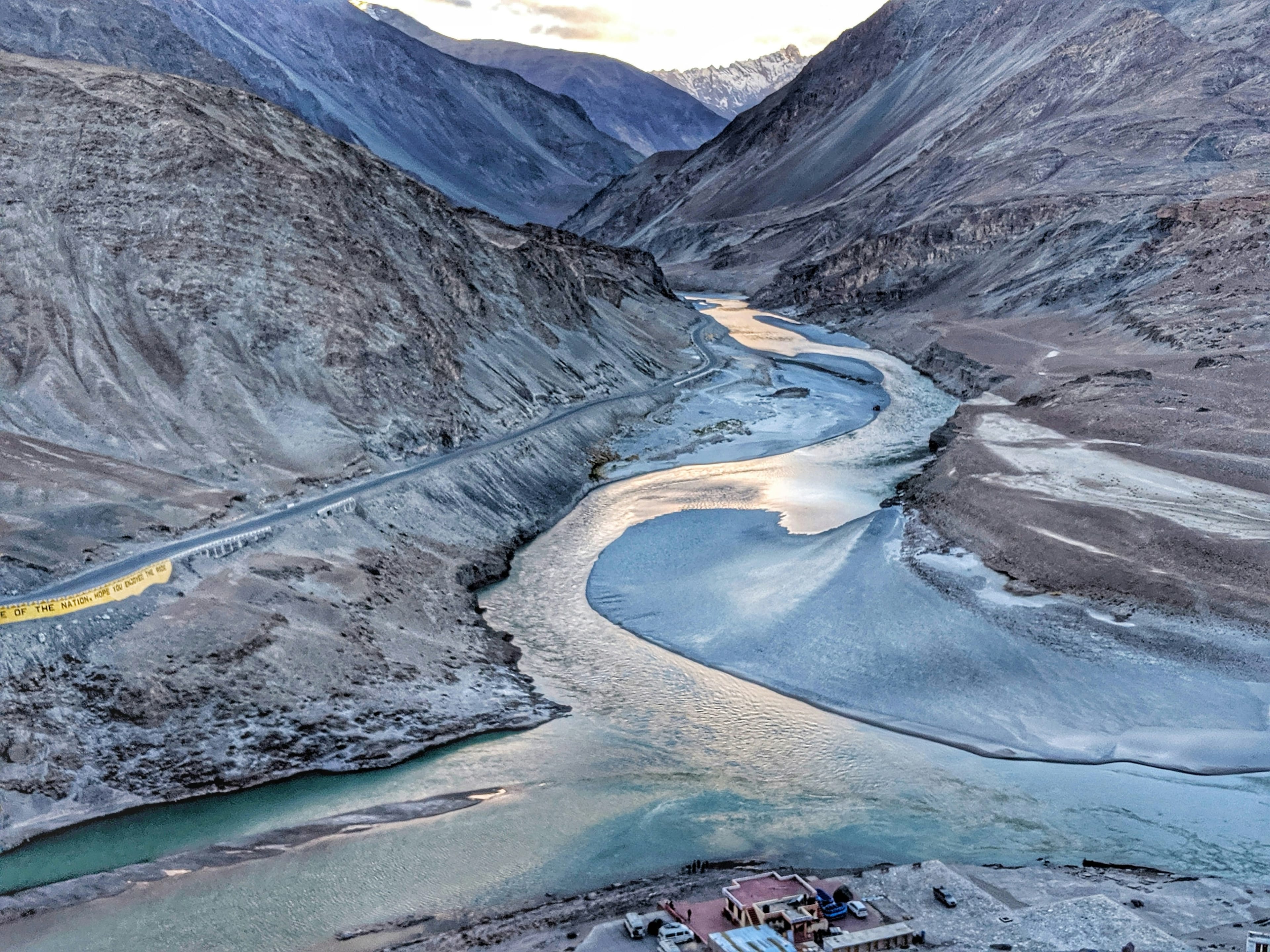
- The confluence of the Indus and Zanskar at Nimmu
- Village homestays and the easy Sham trek
- Apricot orchards in July and golden poplars in October
Best time
April to October; apricot blossom in April, fruit in July.
How to reach
Starts about 25 km from Leh along the Srinagar highway. Most stops are within 1–3 hours' drive.
Things to do
- Stop at Magnetic Hill and the Gurudwara Pathar Sahib
- See the Indus–Zanskar confluence at Nimmu
- Visit Likir Monastery and its large golden Buddha
- Explore the ruined palace and temples at Basgo
- Walk the Sham trek between Likir, Yangthang, Hemis Shukpachan and Temisgam
- Raft a gentle stretch of the Indus in summer
Suggested duration
One to three days, by car or on foot.
Approximate costs
Mostly taxi costs and small monastery fees; homestays from about INR 1,500–2,500 per person with meals. Check current rates.
Accommodation
Homestays in most villages, and guesthouses in Alchi and Likir.
Transportation
Taxi or self-drive for the road circuit; on foot for the trek.
Permits
No permit is needed. Carry photo ID, as checkpoints on the highway sometimes ask for it.
Weather and altitude
Milder than Leh, with warm days and cool nights.
Altitude 3,200 m.
Connectivity
Reasonable along the highway, weak in the side valleys.
What to carry
- Sun protection and a hat
- Comfortable walking shoes for the trek
- Cash for homestays and fees
Practical tips
- Use day two of your trip for Sham: it helps acclimatisation more than resting in your room.
- Homestays are simple and warm-hearted; bring small gifts or simply eat what is served.
- Ask before picking fruit, even from trees by the path.
FAQs
- Is Sham Valley a trek or a drive?
- Both. The main circuit is an easy drive; the 'baby trek' is a 3–4 day walk between villages with homestays, suitable for anyone reasonably fit.
- Is it good for families?
- Very. Distances are short, the altitude is gentle and the villages are welcoming.