
Changthang · 4,300 m
Hanle
A remote valley under one of the darkest skies in Asia, protected as India's first dark-sky reserve.
Your Hanle journey
Hanle, planned gently around you
A remote valley under one of the darkest skies in Asia, protected as India's first dark-sky reserve.
- 01
We begin with your Hanle
Tell us what draws you here, who is coming and how you would like it to feel. Hanle can be many journeys; we start with yours.
- 02
We find the right season
June to September for open roads. We match your dates to the light, the roads and the quiet you are hoping for.
- 03
We set an unhurried pace
One or two nights, timed to dark, moonless skies. At 4,300 m, the way you arrive matters, so acclimatisation is built in from the first day.
- 04
Then, Hanle is simply yours
Stays chosen with care, permits and practicalities settled before you leave. All that remains is to arrive, and look up.
Tell us about your Hanle journey. It takes three minutes.
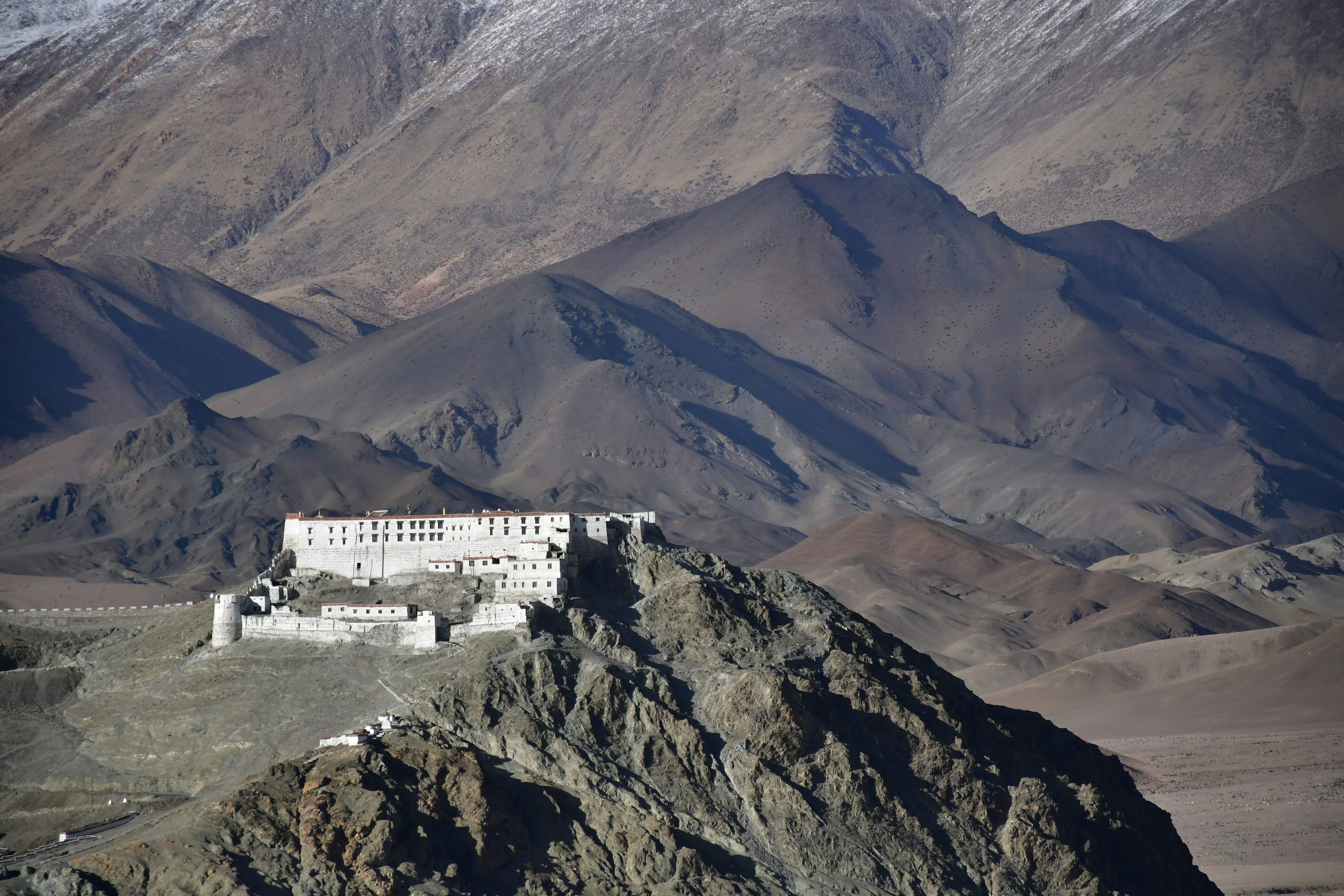
Hanle lies in a broad, empty valley near the Tibetan border at around 4,300 m, with a 17th-century monastery on a hill above a scattering of homes. On the ridge across from it stands the Indian Astronomical Observatory, at about 4,500 m one of the highest observatories in the world. The air is dry, thin and almost free of light pollution, which is why the area was declared the Hanle Dark Sky Reserve in 2022.
On a clear, moonless night the Milky Way casts faint shadows. Getting here is a long day across the plains, but few places in the Himalaya feel this far from everything.
Why visit
- Stargazing in a protected dark-sky reserve
- Hanle Monastery above the valley
- Wide, silent plains with wildlife and nomad camps
- Local homestays trained as night-sky 'astro-ambassadors'
Best time
June to September for open roads. For stars, plan around the new moon; October nights are often the clearest but bitterly cold.
How to reach
About 255–270 km from Leh via Upshi, Mahe and Nyoma: a full day. It can also be combined with Tso Moriri. Check current road and permit conditions with your driver.
Things to do
- Stargaze and photograph the night sky
- Ask your homestay about telescope sessions with local astro-guides
- Visit Hanle Gompa
- See the observatory from the outside (access to the facility itself is restricted)
Suggested duration
One or two nights, timed to dark, moonless skies.
Approximate costs
Homestays from about INR 1,500–3,500 a night, usually with meals. Check current rates.
Accommodation
A small number of family homestays. Arrange yours in advance, because there is little else.
Transportation
Hired taxi or self-drive with spare fuel; fuel is scarce beyond Nyoma.
Permits
Indian citizens: the Inner Line Permit was withdrawn in 2021, so carry valid photo ID; an environment or wildlife fee may still be collected online or at checkpoints. Foreign nationals need a Protected Area Permit, arranged through a registered travel agent in Leh. Rules change often, so confirm with the Leh district administration before you go. Hanle sits close to the border, so carry several copies of your documents.
Weather and altitude
Very cold at night all year, dry and windy by day.
Altitude 4,300 m.
Connectivity
Very limited.
What to carry
- Your warmest layers, a hat and gloves for long nights outside
- A tripod and spare batteries (cold drains them fast)
- A red torch, so you don't spoil anyone's night vision
- Cash and spare fuel if self-driving
Practical tips
- Check the moon phase before you book: a full moon washes out the stars.
- Keep all lights off or red at night; it is a protected dark-sky area.
- Only come after proper acclimatisation in Leh.
FAQs
- Can I visit the observatory?
- Access to the observatory itself is restricted and the rules change. Local homestays often arrange stargazing sessions with their own telescopes instead.
- When is the best time for Milky Way photographs?
- Roughly April to October, on nights close to the new moon. The galactic core is highest in mid-summer.