
Leh district · 3,500 m
Leh
The high-desert capital where every Ladakh journey begins, best savoured slowly.
Your Leh journey
Leh, planned gently around you
The high-desert capital where every Ladakh journey begins, best savoured slowly.
- 01
We begin with your Leh
Tell us what draws you here, who is coming and how you would like it to feel. Leh can be many journeys; we start with yours.
- 02
We find the right season
May to September is the main season, when every road is open. We match your dates to the light, the roads and the quiet you are hoping for.
- 03
We set an unhurried pace
Two to three nights before going higher. At 3,500 m, the days are gentle, and the route is shaped so you are never rushed.
- 04
Then, Leh is simply yours
Stays chosen with care, permits and practicalities settled before you leave. All that remains is to arrive, and look up.
Tell us about your Leh journey. It takes three minutes.
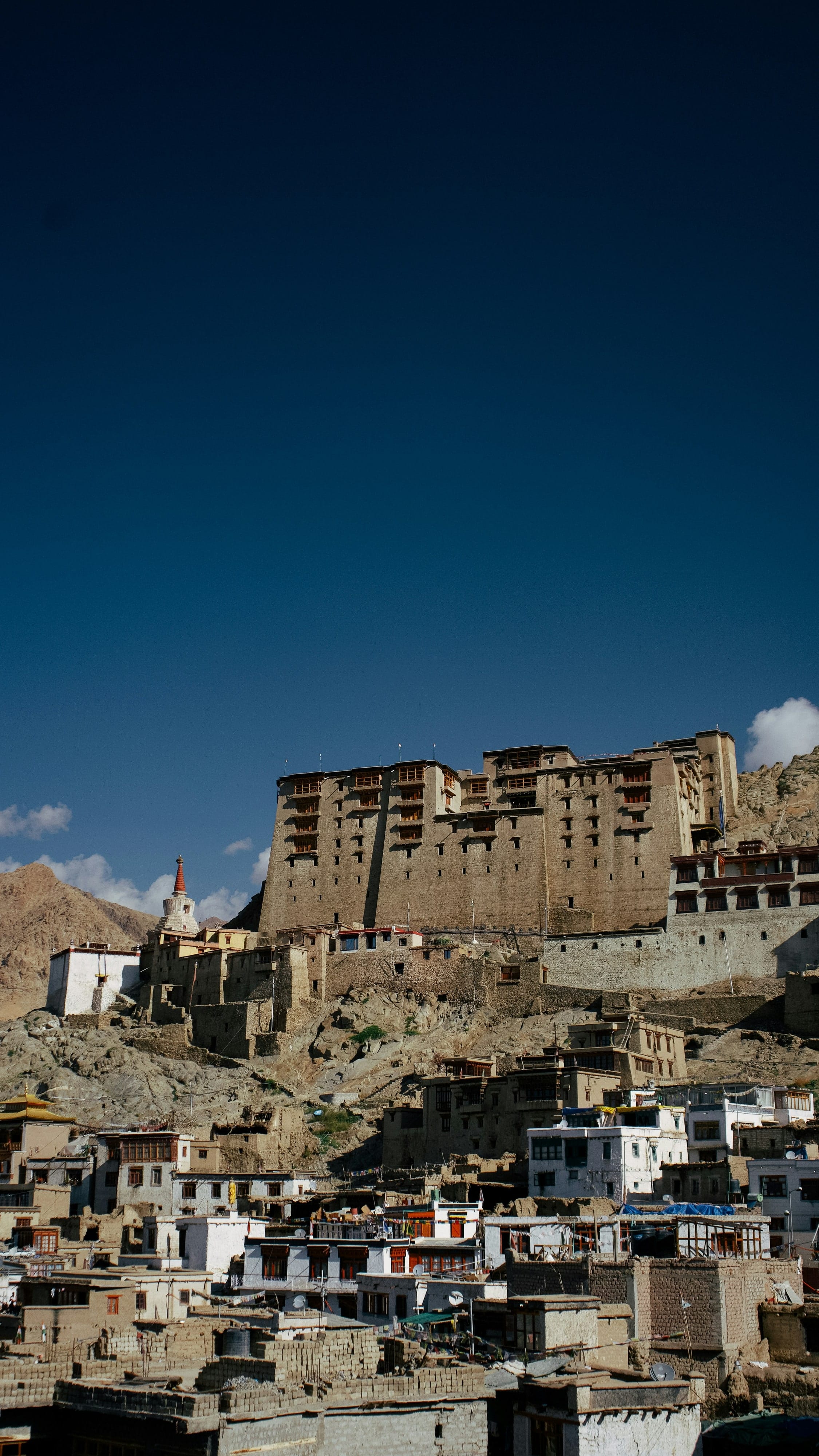
Leh spreads across a wide, sunlit bowl above the Indus at roughly 3,500 m, its mud-brick old town climbing towards a nine-storey palace that once housed the kings of Ladakh. Poplar-lined lanes, prayer wheels and apricot trees sit a few minutes from bakeries, bookshops and rooftop cafés.
For almost every traveller it is the first stop and the base for everything else. The single best decision you can make here is also the least exciting: spend your first two days doing very little. Your body is adjusting to a third less oxygen than at sea level, and the high lakes and passes are far kinder to people who arrive rested.
Why visit
- Acclimatise properly before the high passes and lakes
- The old town, Leh Palace and the Namgyal Tsemo ridge
- Great monasteries within an hour: Thiksey, Shey, Hemis and Spituk
- Shanti Stupa at sunset, with the whole valley below
- The best place in Ladakh to arrange permits, taxis and gear
Best time
May to September is the main season, when every road is open. Late September and October bring clear skies, golden poplars and fewer people, with cold nights. Winter is bitterly cold but beautiful, with flights still running and festivals in the monasteries.
How to reach
Fly into Kushok Bakula Rimpochee Airport (IXL) from Delhi, Mumbai, Srinagar and a few other cities; morning flights over the Himalaya are spectacular. By road, the Srinagar–Leh highway (about 420 km, usually two days with a night in Kargil) acclimatises you gradually; the Manali–Leh highway (about 430 km) crosses several passes above 5,000 m and is best driven with a night stop.
Things to do
- Wander the old town lanes and climb to Leh Palace
- Watch sunset from Shanti Stupa
- Half-day loop to Shey Palace and Thiksey Monastery (morning prayers start early)
- Visit Hemis, Ladakh's largest monastery, especially during its summer festival
- Browse the main bazaar, and the Tibetan and Ladakhi markets
- Take gentle acclimatisation walks along the Changspa lanes
Suggested duration
Two to three nights before going higher. Many travellers use Leh as a base for day trips and return between longer journeys.
Approximate costs
Guesthouses and homestays from about INR 1,500–3,000 a night; comfortable mid-range hotels INR 4,000–9,000; boutique stays above that. A café or restaurant meal is roughly INR 300–800. Local taxis work on fixed union rates. Prices rise in July and August, so check current rates.
Accommodation
Everything from family homestays to boutique hotels, mostly in Changspa, the old town and along Fort Road. Book ahead for July and August, and ask whether rooms are heated if you travel in spring or autumn.
Transportation
The centre is walkable. Taxis follow a fixed rate card from the taxi union stands; shared taxis run to nearby villages. Motorbikes and self-drive cars can be rented, but note that outside rental vehicles face restrictions on some routes, so check before you bring your own.
Permits
No permit is needed. Carry photo ID, as checkpoints on the highway sometimes ask for it. If you are continuing to Nubra, Pangong, Tso Moriri or Hanle, sort out what you need here.
Weather and altitude
Summer days are warm and very bright, around 20–28°C, but nights fall to single figures. Spring and autumn nights are near freezing; winter drops far below. The sun at this altitude burns quickly in any season.
Altitude 3,500 m.
Connectivity
Mobile data and Wi-Fi work in town, though speeds vary and power cuts happen. Prepaid SIMs from other states may not work in Ladakh; postpaid connections from the major networks are the safer bet.
What to carry
- Layers, including a warm down or fleece jacket for evenings
- A sun hat, good sunglasses and high-SPF sunscreen
- A refillable bottle: filtered water is available in town
- Lip balm and moisturiser, as the air is very dry
- Your regular medicines and a basic first-aid kit
Practical tips
- Do nothing strenuous on day one. A short walk and an early night is plenty.
- Drink water steadily and skip alcohol for the first two nights.
- Carry cash: ATMs exist but can run dry, and remote areas rarely take cards.
- Monasteries are working places: dress modestly and walk clockwise around stupas and prayer wheels.
- Bring a cloth bag. Ladakh restricts plastic, and the effort is noticeable.
FAQs
- How many days do I need in Leh?
- Plan at least two full nights before you go above 4,000 m, more if you flew in. If you have time, a day trip to the lower Sham Valley is an ideal second-day outing.
- Will I get altitude sickness?
- Mild headaches and breathlessness are common on arrival. Rest, water and a gradual pace usually help. Severe headache, confusion, vomiting or breathlessness at rest are warning signs: descend and get medical help. Ask your doctor before you travel about medication.
- Is Leh good for families and older travellers?
- Yes, with a slower plan. Build in extra rest days, keep the highest nights short, and choose stays with heating and easy access.