
Leh district · 4,225 m
Pangong Lake
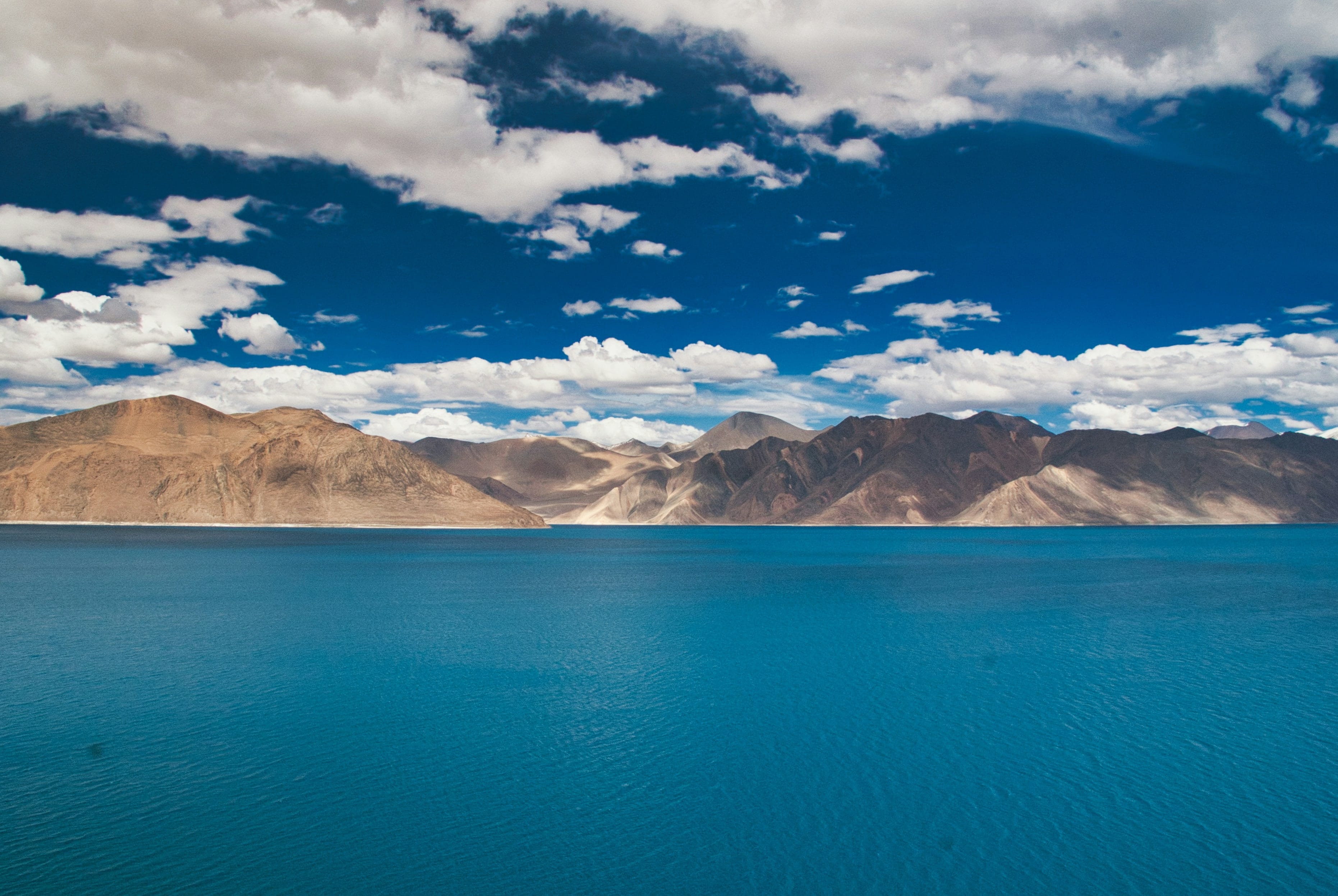
A 134-kilometre ribbon of water that turns from turquoise to deep sapphire with every hour of light.
Your Pangong Lake journey
Pangong Lake, planned gently around you
A 134-kilometre ribbon of water that turns from turquoise to deep sapphire with every hour of light.
- 01
We begin with your Pangong Lake
Tell us what draws you here, who is coming and how you would like it to feel. Pangong Lake can be many journeys; we start with yours.
- 02
We find the right season
June to September for the classic blue water and open roads. We match your dates to the light, the roads and the quiet you are hoping for.
- 03
We set an unhurried pace
One night at minimum; two nights is far more relaxed and gives you a second chance at good light. At 4,225 m, the way you arrive matters, so acclimatisation is built in from the first day.
- 04
Then, Pangong Lake is simply yours
Stays chosen with care, permits and practicalities settled before you leave. All that remains is to arrive, and look up.
Tell us about your Pangong Lake journey. It takes three minutes.
Pangong Tso stretches for around 134 km across the Changthang plateau at roughly 4,225 m, and only about a third of it lies in India; the rest runs on into Tibet. Its water is brackish, so it supports almost no fish, yet it holds colour like nothing else in the Himalaya: pale turquoise at the edges, ink-blue in the middle, and slate grey when clouds roll over.
The road from Leh crosses Chang La at about 5,360 m, which is why acclimatisation matters. Stay overnight rather than racing there and back: the lake is at its best at dawn and dusk, when the day-trippers have gone.
Why visit
- Colour that shifts from turquoise to deep blue through the day
- The high crossing of Chang La on the way
- Quiet shoreline villages like Spangmik, Man and Merak
- Some of the clearest night skies you will ever sleep under
Best time
June to September for the classic blue water and open roads. In May and October nights are freezing and parts of the lake may still be iced. In winter it freezes solid; access is possible but very cold and limited.
How to reach
About 160 km from Leh via Karu and Chang La: plan 5–6 hours each way with stops. It can also be reached from Nubra via Shyok and Agham, which makes a natural loop.
Things to do
- Watch sunrise from the shore near your camp
- Drive or walk along the quieter southern shore towards Man and Merak
- Stargaze on a moonless night (bring a tripod if you photograph)
- Stop at the Chang La café and the wildlife-rich marshes near Tangtse
Suggested duration
One night at minimum; two nights is far more relaxed and gives you a second chance at good light.
Approximate costs
Tented camps and homestays from about INR 2,000–5,000 a night, usually including dinner and breakfast; some comfortable camps cost more. The return taxi from Leh is a significant cost. Check current rates.
Accommodation
Camps and homestays along the shore between Lukung, Spangmik, Man and Merak. Facilities are simple and electricity may be limited to evening hours. Camps further from Lukung are quieter.
Transportation
Hired taxi or self-drive. The road beyond Chang La has rough and wet stretches where meltwater crosses it; afternoons bring higher streams.
Permits
Indian citizens: the Inner Line Permit was withdrawn in 2021, so carry valid photo ID; an environment or wildlife fee may still be collected online or at checkpoints. Foreign nationals need a Protected Area Permit, arranged through a registered travel agent in Leh. Rules change often, so confirm with the Leh district administration before you go.
Weather and altitude
Cold and windy even in July, with nights close to or below freezing. The sun reflecting off the water is intense.
Altitude 4,225 m.
Connectivity
Very limited near the lake. Assume you will be offline from Tangtse onwards.
What to carry
- A proper warm jacket, hat and gloves for the evening
- Sunglasses, sunscreen and lip balm
- Snacks and water for the drive
- Photo ID for checkpoints
Practical tips
- Only go after at least two nights in Leh. Pangong is a common place for altitude sickness in people who rush.
- Leave Leh early so you cross Chang La in the morning.
- Don't drive on the lakeshore, and take every bit of litter back with you. The lake is fragile.
- Stay away from the popular film-location stretch at midday; mornings are calmer everywhere.
FAQs
- Is Pangong too high for a first trip to Ladakh?
- Not if you acclimatise in Leh first and sleep at the lake only one or two nights. Descend if you feel seriously unwell.
- Can I swim in the lake?
- The water is extremely cold, and swimming is discouraged to protect the lake. Enjoy it from the shore.
- Day trip or overnight?
- Overnight, wherever possible. A day trip means ten or more hours in a car at high altitude and misses the best light.