
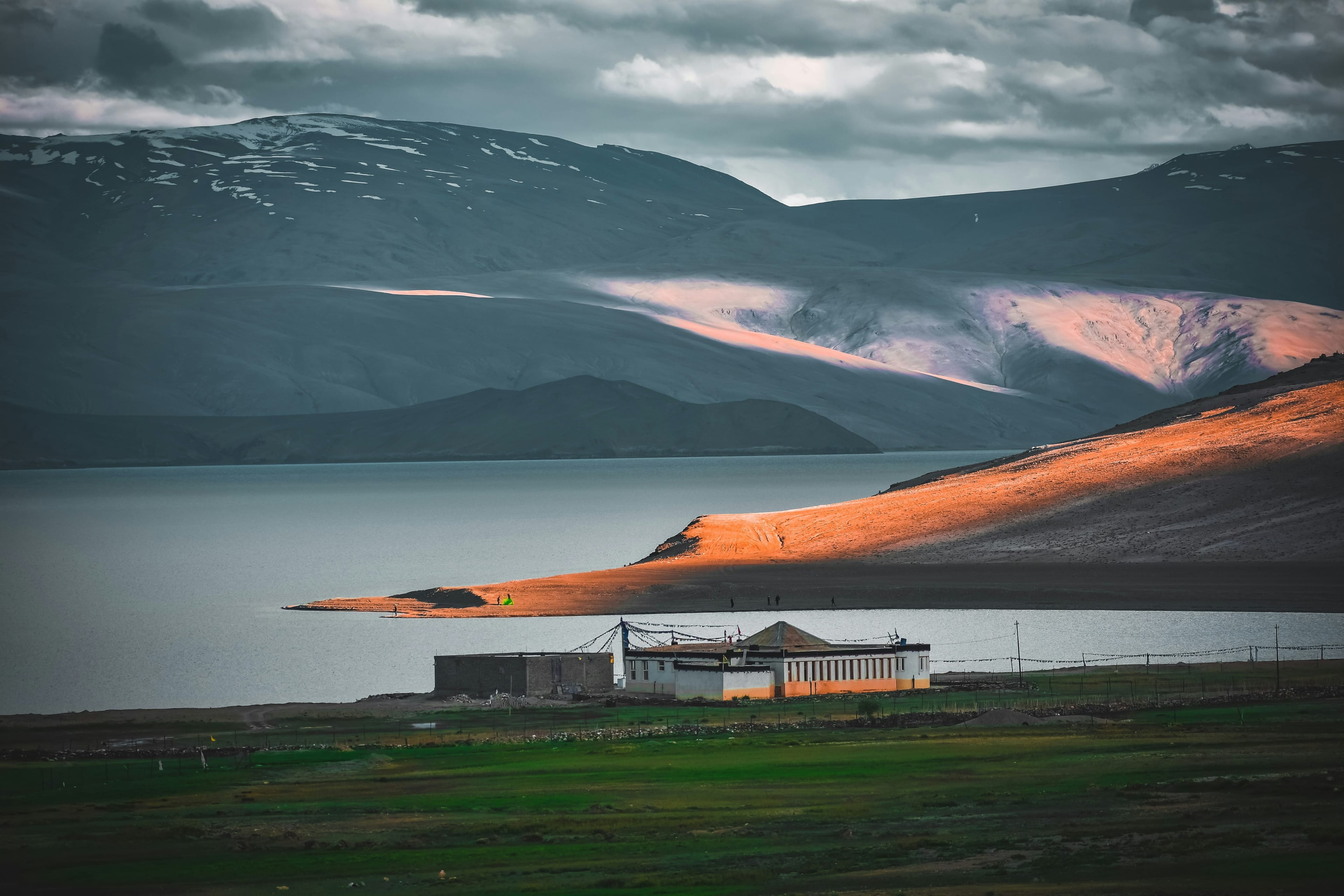
Changthang · 4,522 m
Tso Moriri
A sapphire lake on the high plains, where nomads still move their herds with the seasons.
Your Tso Moriri journey
Tso Moriri, planned gently around you
A sapphire lake on the high plains, where nomads still move their herds with the seasons.
- 01
We begin with your Tso Moriri
Tell us what draws you here, who is coming and how you would like it to feel. Tso Moriri can be many journeys; we start with yours.
- 02
We find the right season
June to mid-September. We match your dates to the light, the roads and the quiet you are hoping for.
- 03
We set an unhurried pace
One or two nights at the lake, ideally after a night somewhere lower on the way. At 4,522 m, the way you arrive matters, so acclimatisation is built in from the first day.
- 04
Then, Tso Moriri is simply yours
Stays chosen with care, permits and practicalities settled before you leave. All that remains is to arrive, and look up.
Tell us about your Tso Moriri journey. It takes three minutes.
Tso Moriri lies at about 4,522 m in the Changthang Wildlife Sanctuary, a protected wetland surrounded by peaks over 6,000 m. It is quieter and wilder than Pangong: the single village, Korzok, has a small monastery, a handful of homestays, and Changpa herding families whose goats produce the famous pashmina wool.
The journey there is half the experience, following the Indus upstream past Chumathang's hot springs and across open plains where you may see kiang (wild asses), marmots and black-necked cranes. The altitude is serious, so come only once you are well acclimatised.
Why visit
- A remote, uncrowded high-altitude lake
- Wildlife on the Changthang plains: kiang, marmots, foxes and migratory birds
- Korzok village and its monastery
- The chance to meet Changpa herders
- Tso Kar, a smaller salt lake, on the way
Best time
June to mid-September. Outside these months nights are severe and services close.
How to reach
About 220 km from Leh via Upshi, Chumathang and Mahe: a full day each way. Many travellers combine it with Tso Kar, or continue south-east to Hanle with good local advice on road conditions.
Things to do
- Walk the shoreline paths around Korzok
- Visit Korzok Gompa
- Bathe at the Chumathang hot springs on the way
- Look for wildlife with binoculars at dawn
- Detour to Tso Kar and its salt flats
Suggested duration
One or two nights at the lake, ideally after a night somewhere lower on the way.
Approximate costs
Homestays and camps from about INR 2,000–4,500 a night, usually with meals. Check current rates.
Accommodation
A few homestays and camps in Korzok. Book in advance in peak season. Nights are cold and facilities simple.
Transportation
Hired taxi or self-drive. Fuel stations are scarce beyond Upshi, so carry spare fuel if you are driving yourself.
Permits
Indian citizens: the Inner Line Permit was withdrawn in 2021, so carry valid photo ID; an environment or wildlife fee may still be collected online or at checkpoints. Foreign nationals need a Protected Area Permit, arranged through a registered travel agent in Leh. Rules change often, so confirm with the Leh district administration before you go.
Weather and altitude
Freezing nights even in summer; strong sun and gusty wind by day.
Altitude 4,522 m.
Connectivity
Minimal. Plan to be completely offline.
What to carry
- Serious warm layers, a hat and gloves
- Binoculars for wildlife
- Cash for homestays
- Snacks, water and a basic medicine kit
Practical tips
- Acclimatise in Leh for at least three nights before going.
- The sanctuary is a breeding area: keep your distance from birds and nests.
- Use homestays: they put money directly into the local community.
FAQs
- Is Tso Moriri better than Pangong?
- It is quieter and more remote, with more wildlife and fewer visitors. Pangong is easier to reach and has more places to stay. Many people love Tso Moriri more, precisely because it takes more effort.
- Is the road difficult?
- It is long rather than technical, with rough stretches. Allow a full day each way and travel with a driver who knows the route.